

David Kassir Quoted in Yahoo Finance: Social Security Says It’s Cleaning Up Millions of Records
David Kassir, Managing Director of Private Wealth Management at Manna Wealth Management, an SEC-registered fiduciary wealth management firm, was quoted in Yahoo Finance in the article "Social Security says it's cleaning up millions of records. What that means for...

David Kassir Quoted in Moneywise: Couples, Cash and a $33K Pokémon Habit
David Kassir, Managing Director of Private Wealth Management at Manna Wealth Management, an SEC-registered fiduciary, was quoted in Moneywise in the article ''You've married poorly': Arkansas woman's husband calls his $33,000 Pokémon card stash a 'portfolio.'' The...

David Kassir Quoted in The Washington Post: How to Get Social Security When You Retire Early
David Kassir, Managing Director of Private Wealth Management at Manna Wealth Management, an SEC-registered fiduciary, was quoted in The Washington Post in the article 'How to get Social Security when you retire early.' The article examines what happens to your...
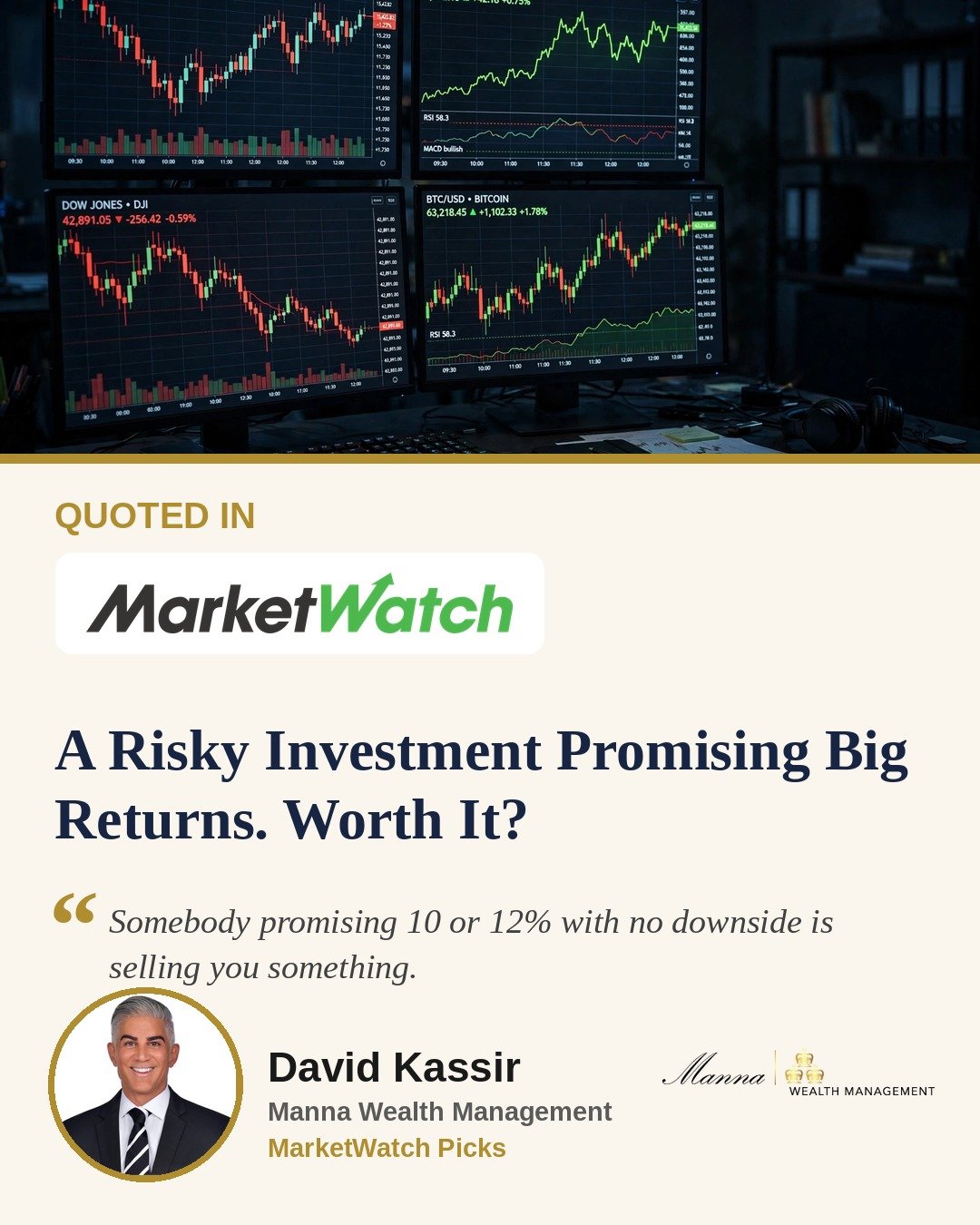
David Kassir Quoted in MarketWatch Picks: Somebody Promising 10 or 12% With No Downside Is Selling You Something
David Kassir, Managing Director of Private Wealth Management at Manna Wealth Management, an SEC-registered fiduciary, was quoted in MarketWatch Picks in the article ''Somebody promising 10 or 12% with no downside is selling you something.' He's considering this risky...
David Kassir Quoted in Yahoo Finance: The 10-Year Treasury Yield Is Above 5%. Should Savers Lock In Now?
David Kassir, Managing Director of Private Wealth Management at Manna Wealth Management, an SEC-registered fiduciary, was quoted in Yahoo Finance in the article 'The 10-year Treasury yield is above 5%. Should savers lock in now?' The article examines whether savers...

David Kassir Quoted in MarketWatch: Why AI Titans Are Giving Away Shares
David Kassir, Managing Director of Private Wealth Management at Manna Wealth Management, was quoted in MarketWatch in the article 'Why Elon Musk, Anthropic and other AI titans are giving away shares.' On the tax strategy behind donating appreciated stock, David said:...

David Kassir Featured in The U.S. Sun on the $5,000 Trump Dividend Warning
David Kassir was quoted in The U.S. Sun on the proposed $5,000 Trump Dividend checks and the scams already circling them. The check does not exist yet. It was proposed in September and tied to Republicans holding the House and Senate in November, and nothing has...

David Kassir Featured in NTD News on Maximizing Social Security Spousal Benefits
David Kassir, Managing Director of Private Wealth Management at Manna Wealth Management, an SEC-registered fiduciary wealth management firm, was quoted in NTD News in the article "3 Ways Couples Can Maximize Social Security Spousal Benefits" In the article, David...

David Kassir Featured in Smart Senior Daily on the Viral $4,427 IRS Claim
Smart Senior Daily | October 14, 2026 No, the IRS Isn't Depositing $4,427 Into Your Bank Account David Kassir, Managing Director of Private Wealth Management at Manna Wealth Management, was quoted by Smart Senior Daily on the viral claim that the IRS is depositing...
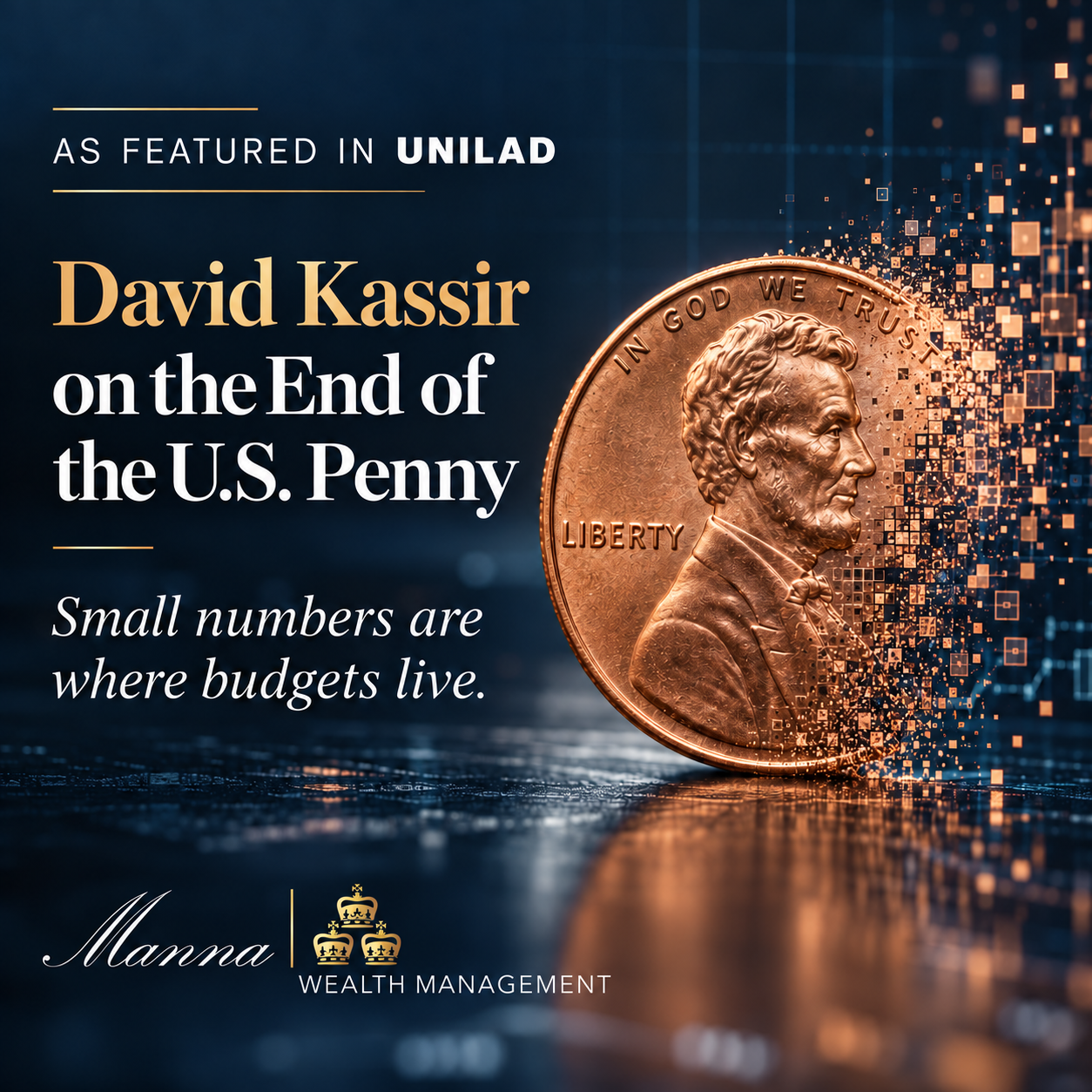
Financial experts reveal how Trump’s end to 234-year US penny tradition could affect your wallet
“Everything gets rounded, probably to the nickel. And rounding is never perfectly fair. Over a year of small purchases, a few cents here and a few cents there start to add up. And who pays cash the most? Lower-income households. They are the ones who feel it first. That is just the reality of it.”

Investment Management vs Financial Planning: What Is the Difference?
When people hear the words investment management and financial planning, they may assume they mean the same thing. When people hear the words investment management and financial planning, they may assume they mean the same thing. They do not. The two services can work...
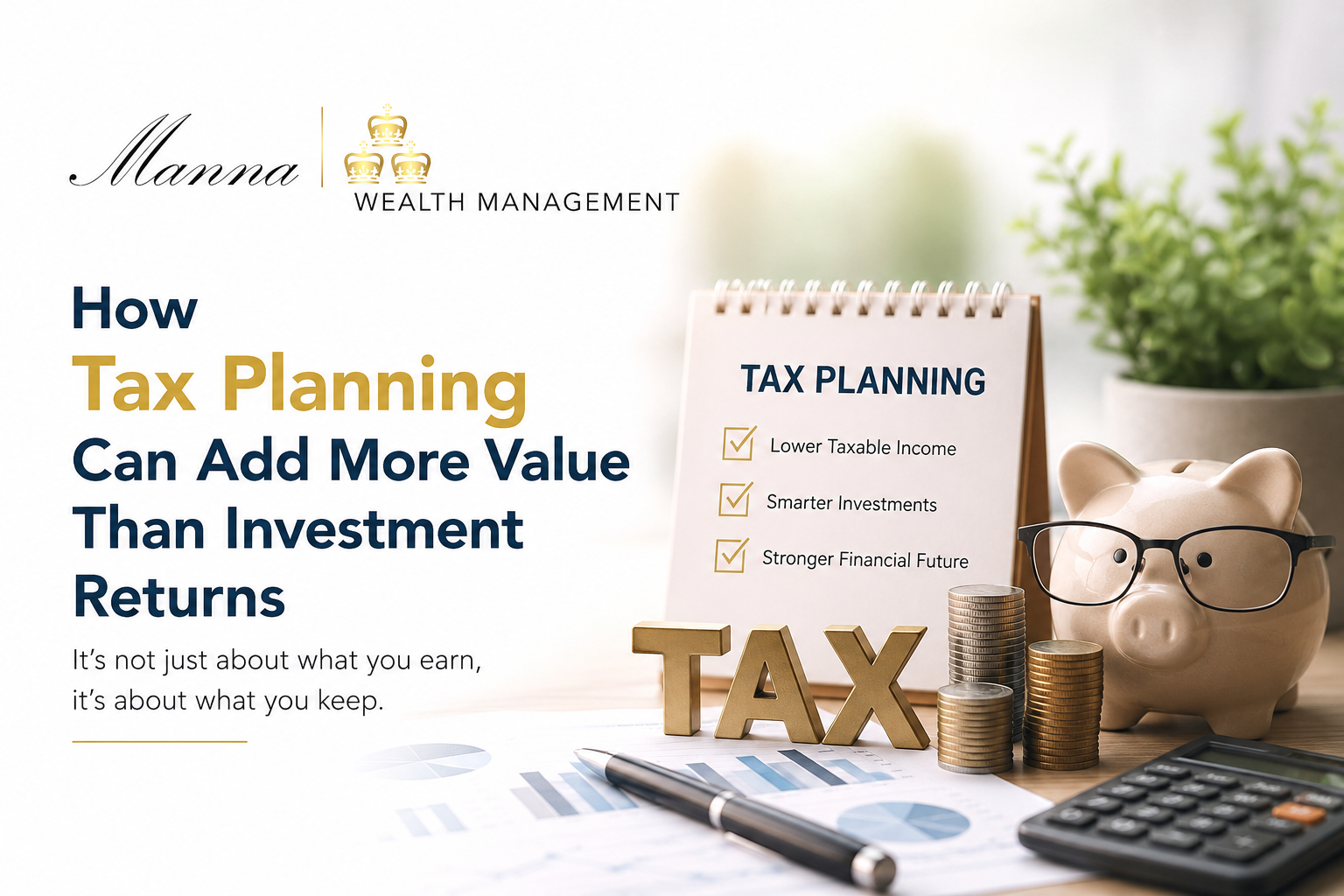
How Tax Planning Can Add Value Alongside Investment Returns
When people think about building and managing wealth, investment returns are often one of the first things that come to mind. Investors may ask: What investments should I own? How should my portfolio be diversified? Should I invest more in stocks or bonds? How much...
Start the Conversation